
Maternal Health Support for Texas Mothers
Help & Resources for Pregnant and Postpartum Mothers in Texas

Serving mothers and families in 68 Texas counties—and growing!
Save Texas Moms is a trusted starting point for pregnant and postpartum mothers in Texas, connecting families statewide to food, housing, diapers, and health resources. Since 2022, STM has supported mothers, families, and community partners in Texas counties through individualized resource navigation, direct support, educational outreach, and local partnerships.
HOW CAN WE HELP YOU TODAY?
Find trusted resources and support for pregnancy, postpartum, and family needs across Texas.
→ Remember to look for urgent maternal warning signs during pregnancy and for a year after delivery. ❤️
Is Your Medicaid or CHIP Coverage Changing?
Health coverage rules change on Oct. 1, 2026, and some Texas families may receive notices that their Medicaid or CHIP coverage is changing or ending.
If you receive a notice:
Don’t ignore it. Read the effective date carefully and keep a copy.
Pregnant? You may have other pregnancy-coverage options, including CHIP Perinatal, depending on your eligibility.
Losing Medicaid or CHIP? You may qualify for a Special Enrollment Period through the Health Insurance Marketplace. You can apply before or after your current coverage ends. People who lose Medicaid or CHIP generally have up to 90 days after coverage ends to select a Marketplace plan.
Need help understanding what comes next? Save Texas Moms can help you find trusted enrollment and healthcare resources.
Keep your coverage notice. You may need it when applying for other coverage.
Pregnant and offered CHIP Perinatal?
CHIP Perinatal is different from full pregnancy Medicaid. It provides pregnancy-related coverage, but not the same 12 months of comprehensive postpartum coverage available through qualifying Medicaid or CHIP coverage. Texas states that CHIP Perinatal coverage continues through the end of the month in which the pregnancy ends, plus two postpartum visits.
Check YourTexasBenefits | Explore Marketplace Coverage | Find Care
“Thank you so very much for the list of resources. I will utilize it to the fullest extent!”
WIC Clinic Locator
Did you know? About 50% of infants born in Texas participate in WIC!
Search by county name to see maternity care access in your area.
What This Means for You
If your county is listed as a maternity care desert or low access, it may be harder to find care close to home—but support is still available.
You may need to travel to a nearby county for prenatal, delivery, or postpartum care. Many mothers in Texas are in the same situation, and there are programs that can help.
Here are a few next steps:
Use our website to find nearby clinics, WIC offices, and support services
Ask your provider or caseworker about transportation assistance
Call 2-1-1 Texas for help finding local resources
If you’re on Medicaid, you may qualify for free rides to medical appointments
You are not alone, and we’re here to help you find the care you need.

Every mother has the right to safe, accessible, and quality maternal healthcare regardless of race, age, socioeconomic status, insurance status, or location.
Improving the affordability, access, and quality of medical care for mothers before, during, and after pregnancy can help reduce preventable maternal deaths and complications.
Our resources make it even easier for Texas mothers to find accurate and relevant information. From pregnancy and postpartum support to food, housing, and diaper assistance, you’ll now find trusted information, resources, and support in one convenient location.
our mission & why this matters
Our goal is to improve the
maternal health of all Texas mothers.
Texas moms need our help—whether single, married, living in rural or urban areas, seeking financial assistance or mental health support. To assist them all, we must protect and advance maternal healthcare through advocacy, education, and community building. And that’s what we continue to do with your support.
Mission Statement:
Our mission is to improve access to safe, high-quality maternal healthcare across Texas through education, support, advocacy, and community partnerships. We believe every mother deserves the opportunity for a healthy pregnancy and postpartum journey, regardless of where she lives, her income, insurance status, age, or background.
Join Us!
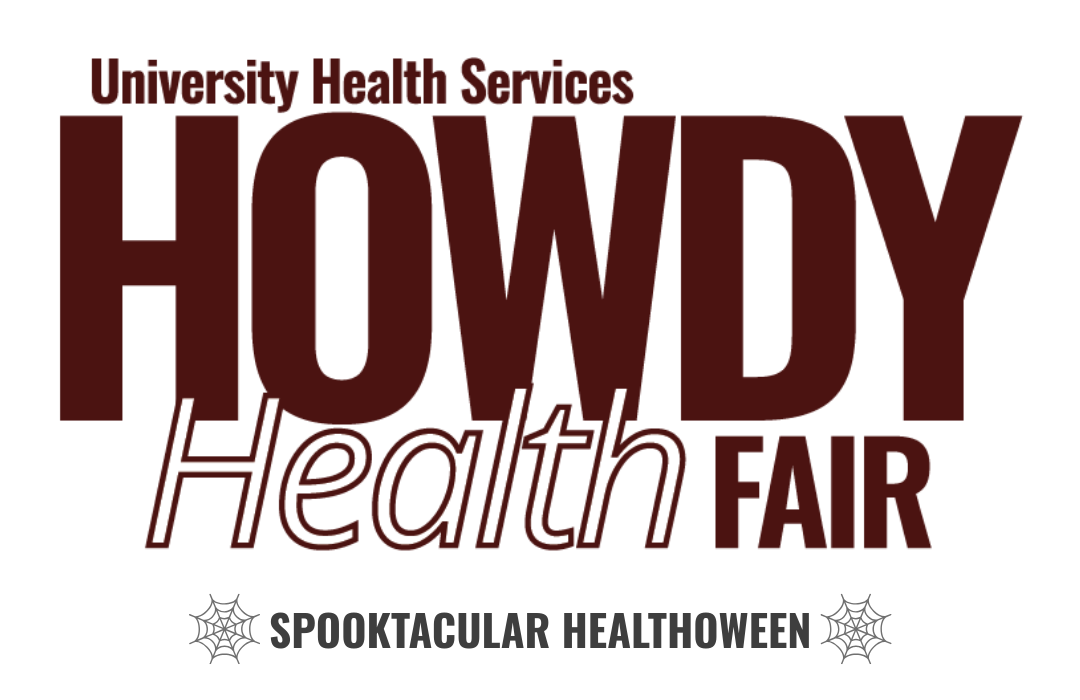
Join Save Texas Moms at Texas A&M University Health Services’ Howdy Health Fair: Spooktacular Healthoween on October 21, from 11 a.m. to 2 p.m.
This festive event connects students with campus and community health resources, including free vision exams, blood pressure screenings, wound care education, and a special appearance by Reveille! Stop by our table to learn more about maternal health, preventive care, and available resources.
¡Acompaña a Save Texas Moms en la feria Howdy Health Fair: Spooktacular Healthoween, organizada por los Servicios de Salud Universitarios de Texas A&M, el 21 de octubre, de 11 a. m. a 2 p. m.!
Este evento festivo conecta a los estudiantes con recursos de salud de la universidad y de la comunidad, incluidos exámenes gratuitos de la vista, toma de presión arterial, educación sobre el cuidado de heridas y una visita especial de Reveille. ¡Visita nuestra mesa para conocer más sobre la salud materna, la atención preventiva y los recursos disponibles!
Join Us!
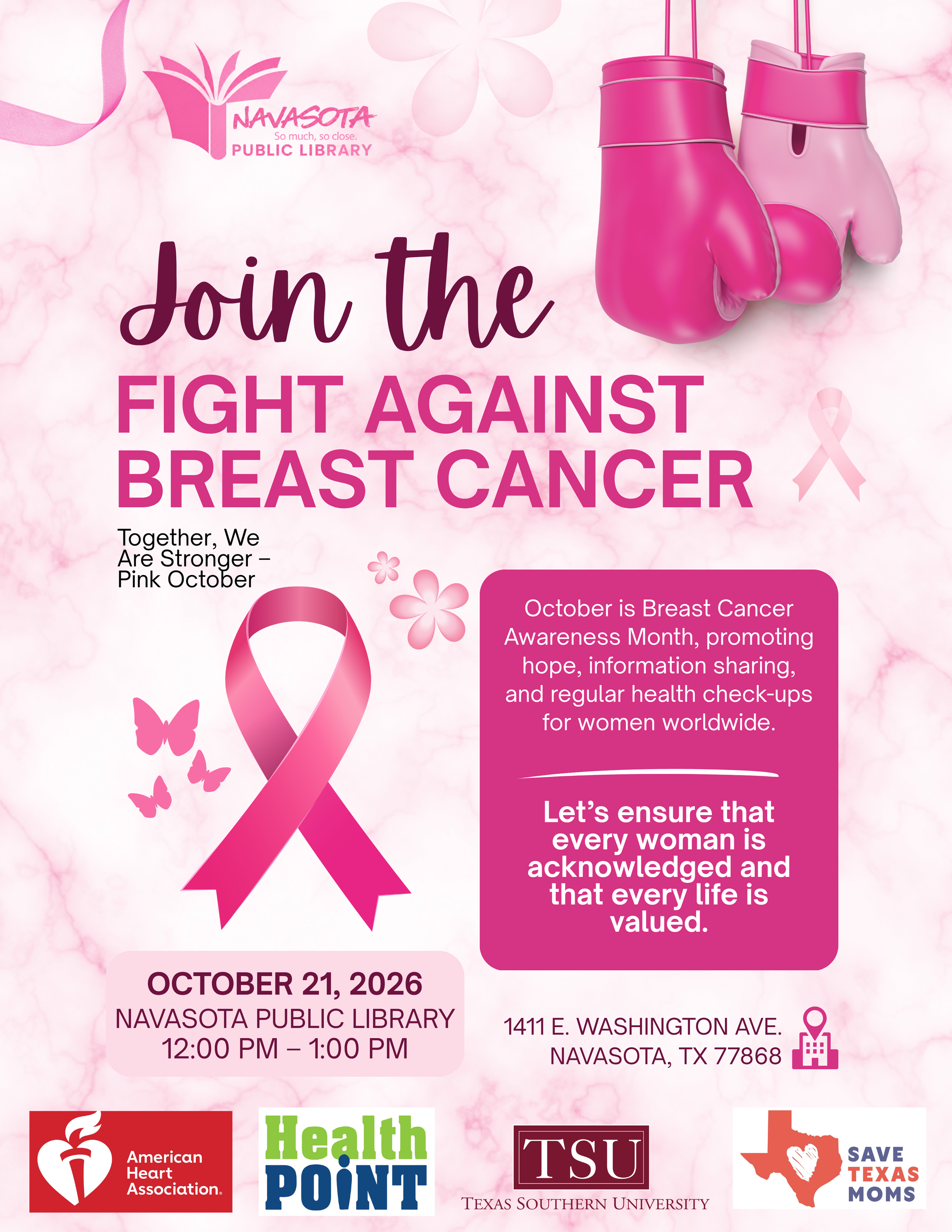
Join Save Texas Moms, American Heart Association, HealthPoint, and Texas Southern University at the Navasota Public Library on October 21, from 12 to 1 p.m., for Join the Fight Against Breast Cancer, a special event recognizing Breast Cancer Awareness Month!
Connect with community health partners, learn about breast cancer awareness and the importance of regular health checkups, and discover resources that support women's health.
Together, we can promote awareness, education, and preventive care.
Location: Navasota Public Library, 1411 E. Washington Ave., Navasota, TX 77868.
¡Acompaña a Save Texas Moms, la American Heart Association, HealthPoint y Texas Southern University en la Biblioteca Pública de Navasota el 21 de octubre, de 12:00 p. m. a 1:00 p. m., para Únete a la Lucha Contra el Cáncer de Mama, un evento especial en reconocimiento del Mes de Concientización sobre el Cáncer de Mama!
Conecta con organizaciones de salud de la comunidad, aprende sobre la prevención y detección temprana del cáncer de mama y la importancia de los chequeos médicos periódicos, y descubre recursos que apoyan la salud de las mujeres.
Juntos podemos promover la concientización, la educación y la atención preventiva.
Lugar: Biblioteca Pública de Navasota, 1411 E. Washington Ave., Navasota, TX 77868.
Frequently Asked Questions (FAQs)
-
Save Texas Moms connects pregnant and postpartum mothers and families across Texas with trusted resources for healthcare, diapers and baby supplies, food, housing, transportation, mental health support, and other community services. If you’re not sure where to start, explore our Resources for Moms page or contact us for help finding resources in your area.
-
Start with our maternal health resources to find clinics, community health centers, and other healthcare options near you. If you have Medicaid or CHIP, you can also search for providers who accept your health plan. Save Texas Moms can help you identify additional resources if you are having difficulty finding care nearby.
-
A maternity care desert is a county with no birthing facilities and no obstetric clinicians providing maternity care. More than half of Texas counties are currently classified as maternity care deserts. Families in these communities may have to travel farther to reach prenatal, delivery, and postpartum care.
-
Yes. Texas is among the states with the highest maternal mortality and morbidity rates in the nation. Texas mothers are more likely to experience pregnancy complications due to limited access to care, provider shortages, gaps in insurance coverage, transportation barriers, racial and economic disparities, and difficulty finding providers who accept a patient’s insurance.
-
You don’t have to figure it out alone. Call 2-1-1 Texas for local health and social service resources, explore our Resources for Moms page, or contact Save Texas Moms at 833-721-MOMS (6667) for help finding resources.
If you are experiencing a medical emergency, call 911.
-
You can support maternal health in Texas by advocating for better healthcare policies, volunteering with Save Texas Moms and other nonprofits addressing maternal health, and raising awareness about the unique challenges Texas mothers face in accessing safe, affordable care, especially in maternity care deserts.

Texas Right Now: The Facts for Texas Moms
The challenges facing moms in rural and underserved Texas are urgent—and solvable. Below are the latest verified data showing just how steep the mountain is.
20% of Texas women ages 19-64 were without health insurance in 2023. Since Texas is one of 10 states that did not adopt the ACA Medicaid expansion, some uninsured women fall into a health “coverage gap” and are not eligible for assistance.*
*KFF estimates based on the 2023 American Community Survey; KFF, Status of State Medicaid Expansion Decisions, as of Nov. 12, 2024
31.2% of Texas women giving birth did not receive prenatal care during the first trimester, compared with 23% nationwide.*
34.7 maternal deaths occurred per 100,000 live births in Texas, compared with 26.3 nationally.**
*The Commonwealth Fund, latest available data: 2022; **The Commonwealth Fund, 2025 State Scorecard on Women’s Health and Reproductive Care, 2020-2022 data
50.8% of Texas counties are classified as Maternity Care Deserts, higher than the 34.6% in the U.S.*
*March of Dimes, Nowhere to Go: Maternity Care Deserts Across the U.S., 2026 Report
“Thank you again for your openness, partnership, and commitment to maternal and family well-being.”
— South CDC – Del Valle ISD Director

Resources for Moms
Find the essential tools and information you need to support your journey through pregnancy and postpartum.

Providers
Access tailored resources to help you enhance maternal care and deliver compassionate, effective support to your patients.

Share Your Story
Share or explore real pregnancy stories to inspire, connect, and empower women navigating their unique motherhood paths.
Every decision we make as an organization is shaped by our mission—and YOU.
Did you find the information you’re looking for? Your opinion is important to us. Please share your feedback to help us improve this website and the resources we provide to Texas families.
Make an impact today
Our work in Texas: Statewide + Local Impact
Save Texas Moms improves maternal health across Texas, with a special focus on the state’s Maternity Care Deserts—communities where pregnant and postpartum mothers face long travel times, limited broadband access, and fewer healthcare resources.
We also continue our focus on underserved and rural families here in the Brazos Valley—our headquarters—and would love your financial support and donations of diapers and baby supplies for the five Maternity Care Desert counties in the Brazos Valley: Madison, Grimes, Leon, Burleson, and Robertson.
“With food stamp benefits being lost, our money that is typically used for diapers and wipes has went towards food cost.”
— Mother in Salado, TX
Thousands of Texas families face this same crisis each month as federal benefits shrink. Don’t let another mom make this impossible choice. Donate to a Diaper Bank near you.
Our Maternal Health Partners











With Our Deepest Gratitude
“Where it’s needed most.”
— Jacobs Giving Fund